
SAPs / EPCs
Standard Assessment Procedure / Energy Performance Certificate
What Is an SAP/EPC
An Energy Performance Certificate (EPC) is an official document that provides an assessment of a property’s energy efficiency, expressed as a rating that reflects the potential cost of running the property. This rating is based on the performance of the building fabric (walls, roof, floors, windows) and the energy efficiency of its heating, hot water, ventilation, and lighting systems.
EPCs are designed to help prospective buyers, tenants, and building owners understand how energy efficient a property is and identify opportunities for improvement.
Why Choose ARN Architectural
What Information Is Collected to Produce an EPC
To produce a legally valid EPC, an accredited Energy Assessor must visit the property and gather a range of details, including:
- Type of property (e.g. flat, bungalow, detached, semi-detached, terraced)
- Approximate age of the property
- Internal dimensions and number of floors
- Type and extent of glazing (e.g. single, double, triple glazing)
- Construction materials (e.g. brick, stone, timber frame)
- Levels and types of insulation (walls, roof, floors)
- Heating systems and fuel types (e.g. gas, oil, electric, heat pumps)
- Presence of new or renewable technologies (e.g. solar panels, battery storage, mechanical ventilation with heat recovery)
- This data is then entered into government-approved software, which calculates the energy rating and produces the EPC
Standard Occupancy Assumptions
The EPC is based on ‘standard occupancy’ assumptions, typically representing a household of two adults and two children. This standardised approach is used to ensure consistent and comparable ratings across similar properties. However, actual energy usage may vary significantly depending on the occupants’ behaviour, such as how often heating is used or how energy-efficient appliances are.
When Do I Need an EPC
An EPC is a legal requirement when:
- A property is newly built
- A property is put on the market for sale or rent
- Certain government schemes or grant applications require one
It is important to ensure the EPC is available to prospective buyers or tenants at the point the property is marketed
How Long Is an EPC Valid
An EPC remains valid for 10 years from the date of issue, or until a more recent EPC is lodged for the property. During this period, the same EPC can be used multiple times, regardless of how many times the property is sold or let. Current occupiers and tenants do not need a new EPC unless they are selling, subletting, or assigning their interest in the property. Once an EPC has expired, it is no longer considered a legally valid document.
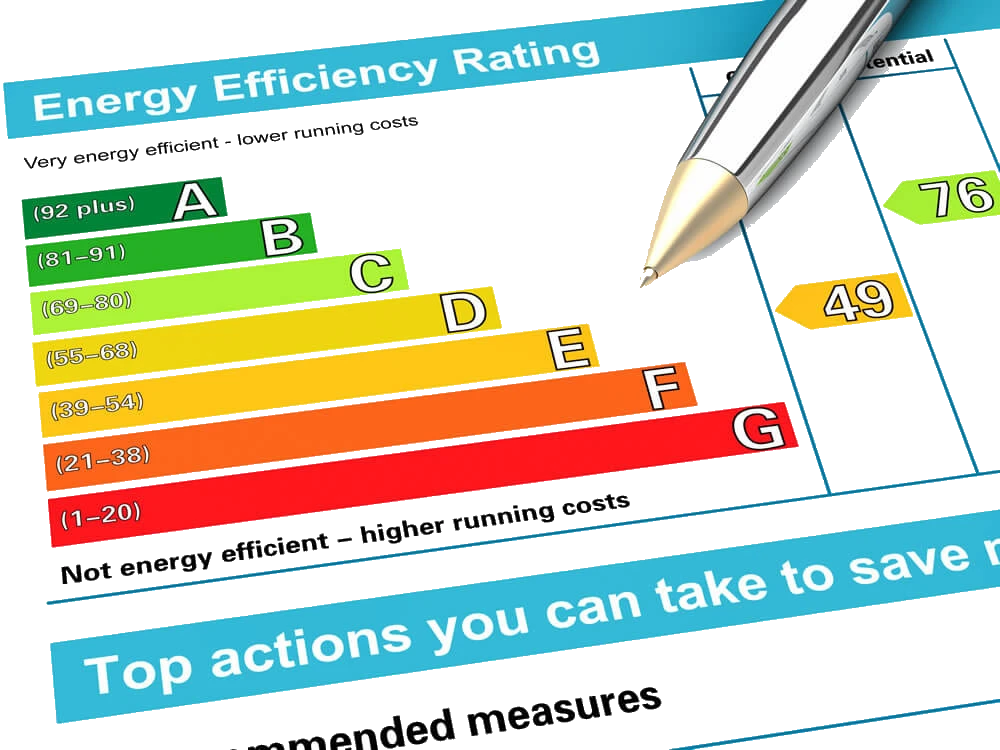
Energy Efficiency Rating
The EPC displays the energy efficiency of the property using a colour-coded scale from A to G:
- A (most efficient)
- G (least efficient)
This rating is primarily based on cost-related factors, such as the type of fuel used for heating, hot water, and lighting. For example, a property using mains gas will generally receive a higher rating than one using electricity, due to the lower cost per kilowatt hour (kWh) of gas at the time of assessment.
Breakdown of Energy Performance by Building Element
As part of the assessment, the EPC provides an individual rating for various building elements, such as:
- Walls
- Roof
- Windows
- Lighting
- Main heating
- Hot Water
These features are rated from “Very Good” to “Very Poor”, based on their energy efficiency—not their physical condition. Some elements, such as floors and secondary heating, are not rated within the EPC.
These ratings are derived from:
- The energy efficiency cost rating
- The environmental impact (CO₂ emissions) rating
In the case of heating and hot water, responsiveness and efficiency of the systems are also considered.
You may notice the term ‘assumed’ in some sections of the EPC. This refers to estimates made by the software where specific information could not be confirmed, typically based on the property’s age, construction type, and visible features.
Environmental Impact Rating
The EPC also includes an Environmental Impact Rating, again on a scale from A to G, which estimates the property’s annual carbon dioxide (CO₂) emissions. This rating helps highlight how much the property contributes to climate change compared with others of a similar type.
As with the energy rating, this is based on standard assumptions and may not fully reflect actual usage by the current or future occupants.
Recommendations for Improvement
The EPC provides a list of recommendations aimed at improving the property’s energy efficiency. These are arranged in order of priority and may include measures such as:
- Upgrading insulation
- Installing a more efficient heating system
- Adding renewable technologies
Each recommendation includes an estimated cost based on average UK installation prices. Actual costs may vary depending on local conditions and the specifics of the property.
To achieve the maximum potential rating shown on the EPC, recommendations should be implemented in the suggested order. Skipping or reordering these measures may affect the final result.
Estimated Energy Use and Potential Savings
While the EPC provides estimates of energy usage, costs, and potential savings, these figures are based on standardised assumptions and are not tailored to your specific usage patterns.
If you want a more accurate representation of your actual energy use, you may wish to commission an occupancy-based assessment. This can be carried out by a qualified retrofit assessor, who will consider how your household uses energy day to day.

One team. All services.
All-in-one architectural, energy assessment & sustainability services—seamless delivery from concept to completion, with expert guidance every step of the way.